VR & AR
Spatial tasks, equipment procedures and site familiarisation.
Explore the service
Technology / Built around the task
Realistic environments. Responsive characters. Decisions with consequences. We bring them together so your people can practise the work.
Explore how it works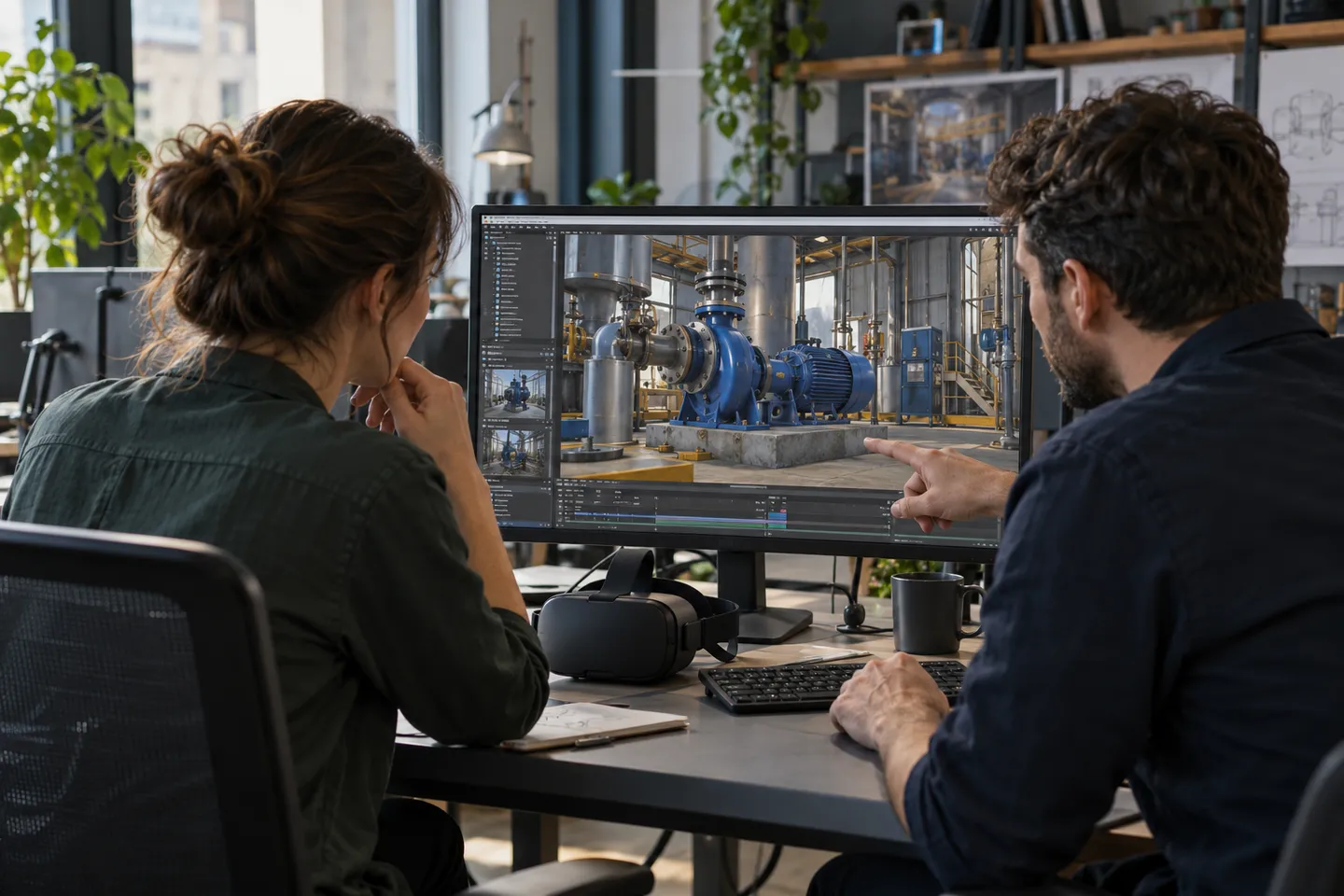
From scene to skill
A convincing scene is only the start. The training needs to respond to what people do, explain what happened and give them a way to improve.
Open a capability to explore the production approach.
3D design and scanning turn reference material into environments that run on the chosen device. We balance visual detail with clear navigation, readable instructions and responsive performance.
Scenario scripting defines what happens when someone selects a tool, misses a step or chooses a response. Feedback follows the procedure agreed with your subject experts.
Character design, animation and motion capture support believable behaviour. Conversational AI is configured around the role, approved knowledge and boundaries of the training scenario.
We define the events, assessment criteria and reporting needs before development. The aim is useful feedback for learners and evidence your team can interpret, with appropriate data permissions.
Delivery, by design
We choose the device and delivery channel around the audience, the task and where training will happen.
Spatial tasks, equipment procedures and site familiarisation.
Explore the serviceConversation practice and interactive characters without a headset.
Explore the serviceScope identity, LMS connections and reporting around your existing systems.
Explore the serviceBeyond the demonstration
Before production, we agree the requirements that make the experience practical to deploy, maintain and measure.
See our development processAnswers
Clear answers for teams evaluating the right approach.
Capabilities include real-time 3D, VR, AR, conversational AI, digital humans, motion capture, scanning and interactive web delivery.
We select devices, engines and delivery channels around the use case, audience, security requirements and existing enterprise systems.
Prototypes are tested for device performance, usability, accessibility and content clarity before full production and rollout.