
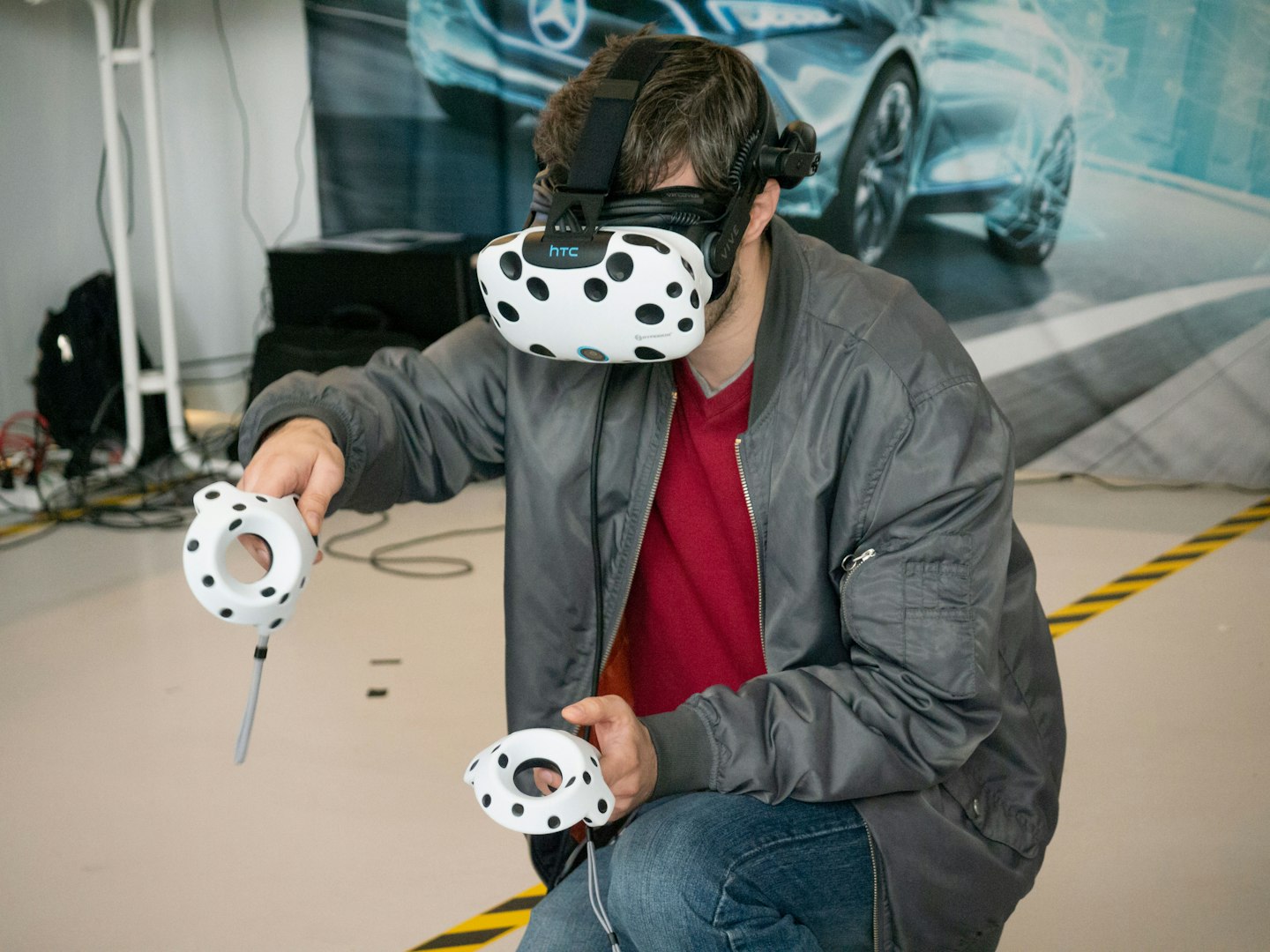
What should a business include in its VR training budget?
VR training cost includes content, equipment, delivery software, integration and the people needed to run the programme. A subscription to an existing course and a simulation of your own workplace are different purchases. Start with the task employees need to practise, then compare the full cost of delivering that practice.
This guide helps learning, operations and procurement teams prepare a realistic brief. It separates published supplier examples from your own budget assumptions, explains recurring costs and gives you questions to ask before commissioning immersive XR training. Prices cited here were checked on 21 October 2026; they are examples, not a Mimic Business quotation.
Table of contents
- VR training cost: how to read published prices
- Choose the training format before comparing quotes
- Budget for hardware, integration and ongoing costs
- Build a pilot budget and compare supplier proposals
- Frequently asked questions about VR training costs
- Conclusion: turn the budget into a clear brief
VR training cost: how to read published prices

Compare VR training pricing only when the deliverables, currency and billing period match. A per-module annual licence cannot be compared directly with a one-off production fee. Neither automatically includes the headsets, staff or systems needed to deliver training.
As one supplier-specific reference, VR Vision’s published 2026 pricing guide lists pre-built licences at CAD 1,000–15,000 per module per year, custom interactive 360-degree video at CAD 30,000–60,000 per module, and custom 3D modules at CAD 65,000–120,000. These are that supplier’s figures, not market averages, a combined package or Mimic Business pricing.
Keep the original currency beside every number. For a budget in euros, obtain a current euro quote or document the exchange rate and date used by your finance team. Confirm applicable taxes, travel, implementation and contractual exclusions rather than assuming they are covered.
Separate the first-year budget from renewal costs
Request two views of each proposal: the amount required to launch and the amount required to keep the programme available. A low first-year offer can become expensive when usage grows or renewal discounts end. Conversely, a substantial initial build may support several later procedures, but only if the ownership and reuse terms allow it.
Ask what “one module” means. Does it include a single successful path, several mistakes, guided practice and an independent assessment? How many review rounds and languages are included? A ten-minute experience with detailed equipment interactions may require more work than a longer guided tour. Duration alone is not a reliable comparison.
Budget approval also needs a clear purpose. Your business case might concern readiness for an infrequent task, reduced use of training equipment or more consistent practice. Keep the financial assessment separate from the learning design; our VR training ROI guide explains how to evaluate the investment without assuming every improvement comes from VR.
Choose the training format before comparing quotes
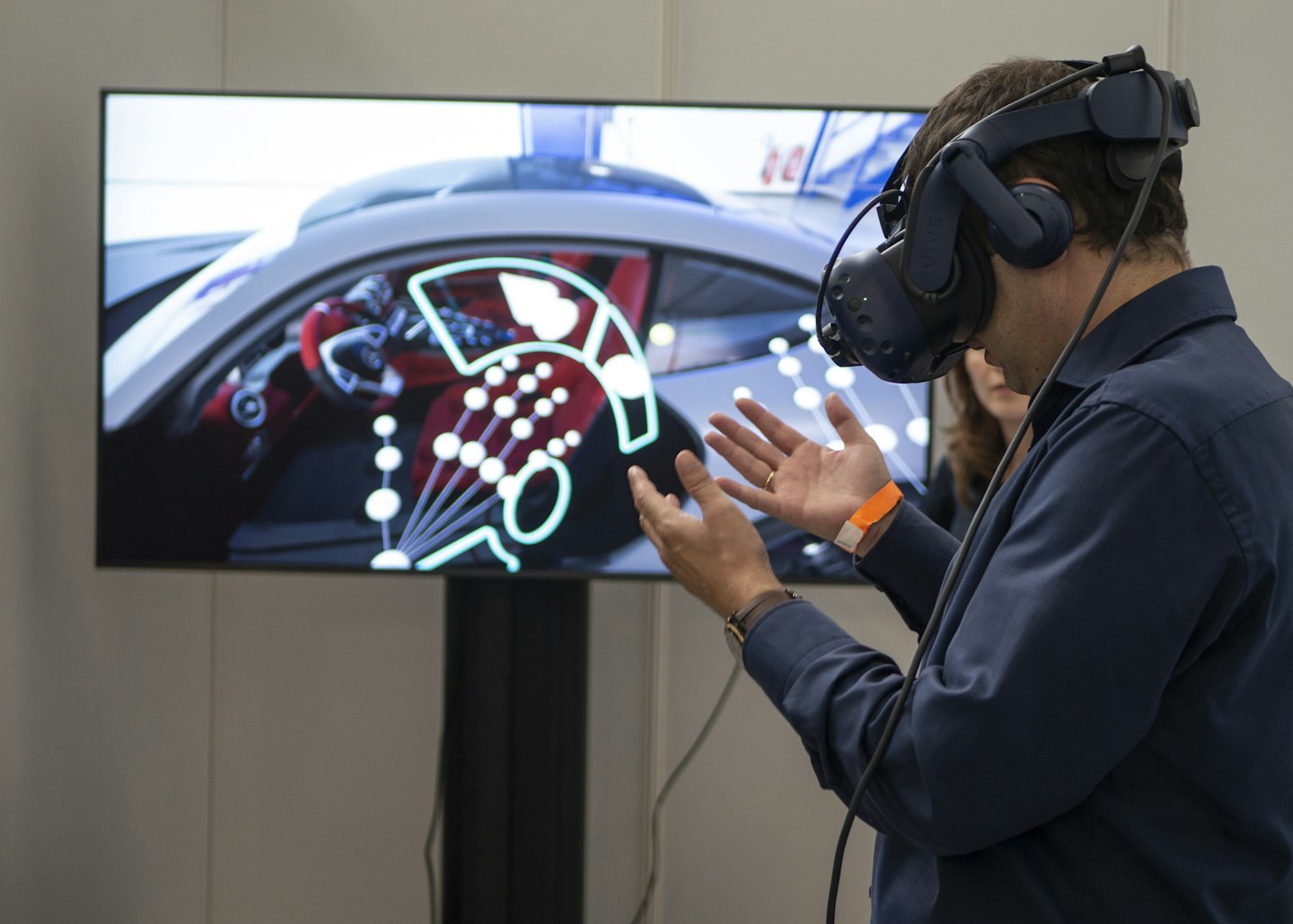
Choose the least complex format that lets employees practise the required decisions. Define what learners must do, what feedback they need and how their performance will be assessed. Then ask suppliers to demonstrate how their proposed format meets that requirement.
Ready-made content and configurable modules
An existing module is worth considering when its procedures and learning objectives closely match yours. Check the equipment shown, terminology, assessment rules and permitted modifications. Ask to review the actual module rather than judging it from a promotional video.
Clarify whether licensing is based on users, devices, sites, modules or usage. Identify the number of people who need access now and the conditions for expansion. Include any adaptation work in the comparison: changing a logo is different from rewriting a procedure and validating the revised assessment.
360-degree video and custom interactive environments
A filmed environment can be useful when observation and choices are central to the exercise. Check how filming access, participants, editing, decision points and future reshoots are handled. An interactive 3D environment should be considered when the learner needs to move through space, manipulate objects or encounter changing conditions.
For custom VR training development, describe the behaviour of the scene as carefully as its appearance. Which objects can be operated? What happens after an incorrect decision? Which actions need to be recorded? Our scenario-based training guide provides a starting point for defining this scope.
Existing models and reference material may help, but they need a suitability review. Engineering files can require simplification, interaction design and approval before use in training. Treat a digital twin training environment as a defined deliverable, not an automatic by-product of owning CAD files.
When a headset is not essential
If the main requirement is practising a conversation, compare headset delivery with desktop AI role-play and coaching. If people need guidance alongside real equipment, examine augmented reality training. Include the cost of validating responses, supervising feedback and maintaining knowledge when AI is involved. More technology is useful only when it supports the learning task.
Budget for hardware, integration and ongoing costs
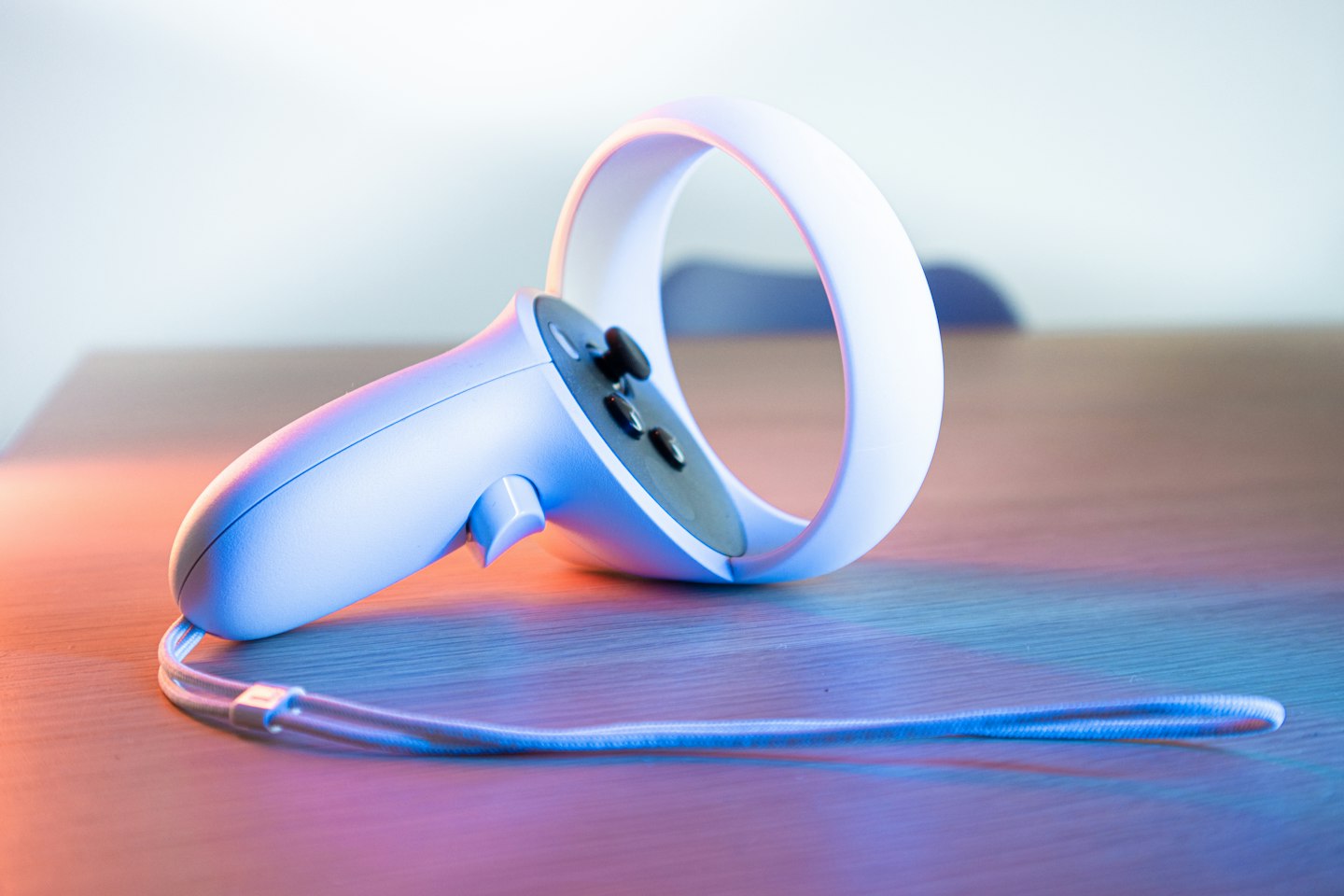
VR training total cost of ownership is the cost of building, operating and maintaining the programme over a defined period. Prepare a three-year view as well as the launch budget. Keep one-off fees, annual commitments, variable usage and your own staff time on separate lines.
- Production: learning design, assets, interactions, review and testing.
- Equipment: compatible headsets, accessories, spares, storage and charging.
- Delivery: software licences, distribution, device administration and support.
- Integration: identity, reporting, LMS connections and acceptance testing.
- Operations: facilitation, scheduling, cleaning, updates and learner support.
Plan headset capacity around the training schedule
VR headset costs depend on more than the unit price. Confirm that the devices support your application and business deployment arrangements. Ask how warranty, replacement, accounts and software updates will work. Include a suitable training space and a supported alternative for people who cannot comfortably use the headset.
Calculate capacity from actual sessions. As a planning illustration, four headsets available for six hours each provide 24 headset-hours. At 30 minutes per complete appointment, that is a theoretical maximum of 48 appointments before breaks, failures or scheduling gaps. Use a lower practical capacity agreed with the training team; do not buy devices using an assumed universal learner ratio.
Distinguish device management from learning software
Managing a headset fleet is a separate requirement from owning training content. HTC’s device-management documentation describes content deployment, roles and device configuration. Ask which of these capabilities your proposal includes and who will administer them.
Some services charge per device: ArborXR’s pricing page illustrates this billing model. Check the current plan, commitment and applicable charges directly rather than assuming management software is included with hardware. The same discipline applies to hosting, analytics and AI usage.
Specify what your LMS must receive
“LMS integration” needs an acceptance checklist. Identify the destination system, sign-in requirements, completion rules and assessment fields. Agree how failed transfers are handled and test a real reporting example in a non-production environment. A completion flag and a detailed record of learner decisions are different requirements.
Choose a few meaningful measures before commissioning a dashboard. The immersive learning analytics guide helps connect learning records to workplace evidence. Collect only what the agreed purpose requires, and allocate time for security, access and retention reviews with the appropriate internal teams.
Finally, assign an owner for updates. Procedures, products and software change. Ask for the rate or allowance for revisions, the supported device lifecycle and what happens when a licence ends. Document whether your team receives editable assets and what can be reused in later modules.
Build a pilot budget and compare supplier proposals

A useful VR training pilot answers a specific investment question. Choose one learner group, one task and a practical measure of success. Set an approval point before expanding. A pilot should test learning, delivery and operational fit, not simply whether people enjoy trying a headset.
Prepare a short brief that suppliers can price
- Describe the task, its current training method and the problem you want to address.
- State the learner numbers, sites, languages and accessibility needs.
- List the materials available: procedures, reference images, models and assessment criteria.
- Identify the required devices, reporting destination and connectivity constraints.
- Name the reviewers, sign-off stages and target delivery window.
- Request separate prices for the pilot, expansion and ongoing operation.
Ask each supplier to respond to the same brief. Record assumptions and exclusions beside the price, including your own responsibilities. Check how change requests are approved and charged. Our production process explains the stages to discuss when defining the work with Mimic Business.
Calculate cost per employee without overstating savings
Divide the agreed programme cost for a stated period by the unique employees who complete training in that period. For example, an illustrative EUR 24,000 budget divided by 120 completers equals EUR 200 per employee. This is arithmetic, not a market estimate or Mimic Business quote. If only 60 complete, the figure becomes EUR 400. Repeated practice is valuable, but should not be counted as additional unique employees.
Keep learning effectiveness alongside that calculation. In PwC’s soft-skills training study, VR reached cost parity with classroom learning at 375 learners under the study’s assumptions. That result does not establish a break-even threshold for your programme. Your existing delivery costs, content, utilisation and outcomes may be different.
Before scaling, review completion, observed performance, technical reliability and the effort required from facilitators. Investigate low participation rather than spreading costs across employees who never trained. The enterprise VR training programme guide covers the wider rollout decisions after a pilot.
Include an agreed contingency line for unresolved scope, but show what it covers and who can release it. Keep optional features outside the committed baseline. This gives procurement a comparable price and gives the production team a clear definition of what must be delivered.
Frequently asked questions about VR training costs
How much does VR training cost for a business?
There is no single business price. A licensed module, a filmed 360-degree experience and a custom interactive simulation involve different work. Compare a written scope, the first-year total and recurring charges. The supplier examples above are Canadian-dollar benchmarks, not Mimic Business prices.
What is included in custom VR training development?
Specify discovery, learning design, environment creation, interactions, assessment, testing and deployment in the quote. Ask whether voice recording, languages, accessibility work, integrations, source files and post-launch changes are included or separately priced.
How do I calculate VR training cost per employee?
Divide the programme cost for a stated period by the number of unique employees who actually complete training in that period. Keep repeat practice sessions separate. State whether development, hardware, licences, staff time and support are included so comparisons use the same basis.
Is ready-made VR training cheaper than a custom simulation?
It can reduce initial production work when its content fits your task. Compare licence renewals, required adaptations, learner limits and platform fees. A cheaper module is poor value if it teaches a different procedure or cannot assess the behaviour you need.
How many VR headsets should a pilot budget include?
Calculate the number from simultaneous learners, session length, reset and cleaning time, available training hours and a spare-device allowance. Check the plan against real shifts and locations. There is no universal headset-to-employee ratio.
What ongoing VR training costs are easy to miss?
Common omissions include device administration, support, software renewals, replacement equipment, content revisions, language updates and internal review time. AI-enabled scenarios may also have usage charges. Ask for the billing unit and renewal terms for every recurring service.
Can VR training work without an LMS integration?
A pilot may use a separate reporting process if your organisation accepts it. Decide how attendance, completion and assessment results will be recorded and protected. If the final programme requires LMS integration, budget for that requirement before selecting the pilot architecture.
Does Mimic Business have a fixed VR training price?
This guide does not publish a Mimic Business price list. Request a scoped proposal describing your training task, learners, sites, equipment, languages, reporting needs and existing materials. That gives both teams a sound basis for discussing cost and delivery.
Conclusion: turn the budget into a clear brief
A useful VR training budget connects a defined learning task with a complete delivery plan. Compare scope before price, separate initial and recurring costs, and test the assumptions with a focused pilot. That creates a more useful decision than choosing the lowest module price or the most impressive demonstration.
Discuss your VR training brief with Mimic Business. Share the task, audience, locations and existing materials so we can discuss an appropriate approach and the scope needed for a proposal.
Research checked: 21 October 2026. Written by the Mimic Business editorial team. Supplier examples are attributed where used and may change. Photographs are illustrative editorial images licensed through Unsplash; they do not document Mimic Business deployments or imply endorsement.
Further reading
PwC virtual reality soft-skills training study — Research on VR soft-skills training. Its findings depend on the study context and should not be treated as a forecast for every training programme.
Discussion
Join the conversation
Comments are reviewed before publication to keep the discussion useful.