


What should a manufacturing XR training pilot include?
A manufacturing XR training pilot needs one defined learning problem, approved reference material, a bounded experience, a delivery plan and an assessment agreed before production starts. Specify what the supplier must hand over, who approves it and what evidence will support a decision to revise, expand or stop. Completing a headset demonstration is a milestone; it is not proof that someone can perform the real task.
This guide is a practical briefing and acceptance framework for operations, learning and procurement teams. Our VR training for manufacturing guide covers use cases and simulation choices. Here, the focus is the working agreement: scope, deliverables, review responsibilities and success measures. The sample brief and feedback below are illustrative planning examples, not reported Mimic customer results.
Table of contents
- Write a pilot brief that can be approved
- Set the scope and exclusions
- Specify the supplier deliverables
- Organise review gates and the pilot session
- Choose success measures and feedback
- Make the rollout decision
- Frequently asked questions
- Prepare your pilot discussion
Write a pilot brief that can be approved
Start with the decision the learner needs to make. “Introduce VR to the plant” describes a technology initiative. “Help new starters identify the correct inspection location and explain when to ask for assistance” describes something that can be taught and assessed. Write the current difficulty, intended audience and expected behaviour in plain language.
A useful one-page brief records the task, equipment variant, approved procedure revision, participants, delivery location and assessment. Add a named operations owner, subject expert, learning lead and technical contact. One person may hold several roles, but content approval and purchase approval should be explicit. Our manufacturing training services provide a starting point for discussing the experience around the work.
- Example objective: After practice, the learner identifies three inspection locations on a training asset and explains the agreed escalation route without on-screen hints.
- Example audience: New starters who have completed the required site induction; record their relevant prior experience.
- Example experience: One equipment variant, three observation points and one controlled exception, reviewed by the procedure owner.
- Example decision: Determine whether the experience warrants revision, another trial or extension to a related task.
Do not invent a pass mark because a dashboard requires one. Ask the qualified task owner which observations are mandatory, which errors require retraining and how competence is assessed under existing arrangements. The pilot should support that process, with any necessary physical practice and supervision still in place.
Set the scope and exclusions

Define what the learner can see, select, move and decide. For each interaction, state the expected response, the feedback and any condition that ends the exercise. Distinguish visual familiarity from physical skill: recognising a component in a simulation does not establish the ability to apply force, feel resistance or use a real tool correctly.
Choose the delivery format after defining the task. VR can support rehearsal in a simulated environment; AR can put information alongside a physical object. A tablet, desktop experience or instructor demonstration may also meet the objective. Use our projected work instructions versus AR headsets comparison when the decision concerns where guidance appears, and the AR work instructions guide when writing the approved steps.
List exclusions in the brief: other equipment variants, additional languages, production-system integrations, automatic competence certification and full-site rollout, unless explicitly included. Explain what will happen when a participant takes an action outside the prototype's scope. An unavailable action should be recognisable rather than mistaken for a correct decision.
Keep a change log with the requested change, reason, owner, cost or schedule implication and decision. A new machine variant is not simply a different colour if its controls, sequence or inspection points differ. Resolve these changes before expanding the asset list. This gives procurement a clearer basis for comparing proposals with the same boundaries.
Specify the supplier deliverables
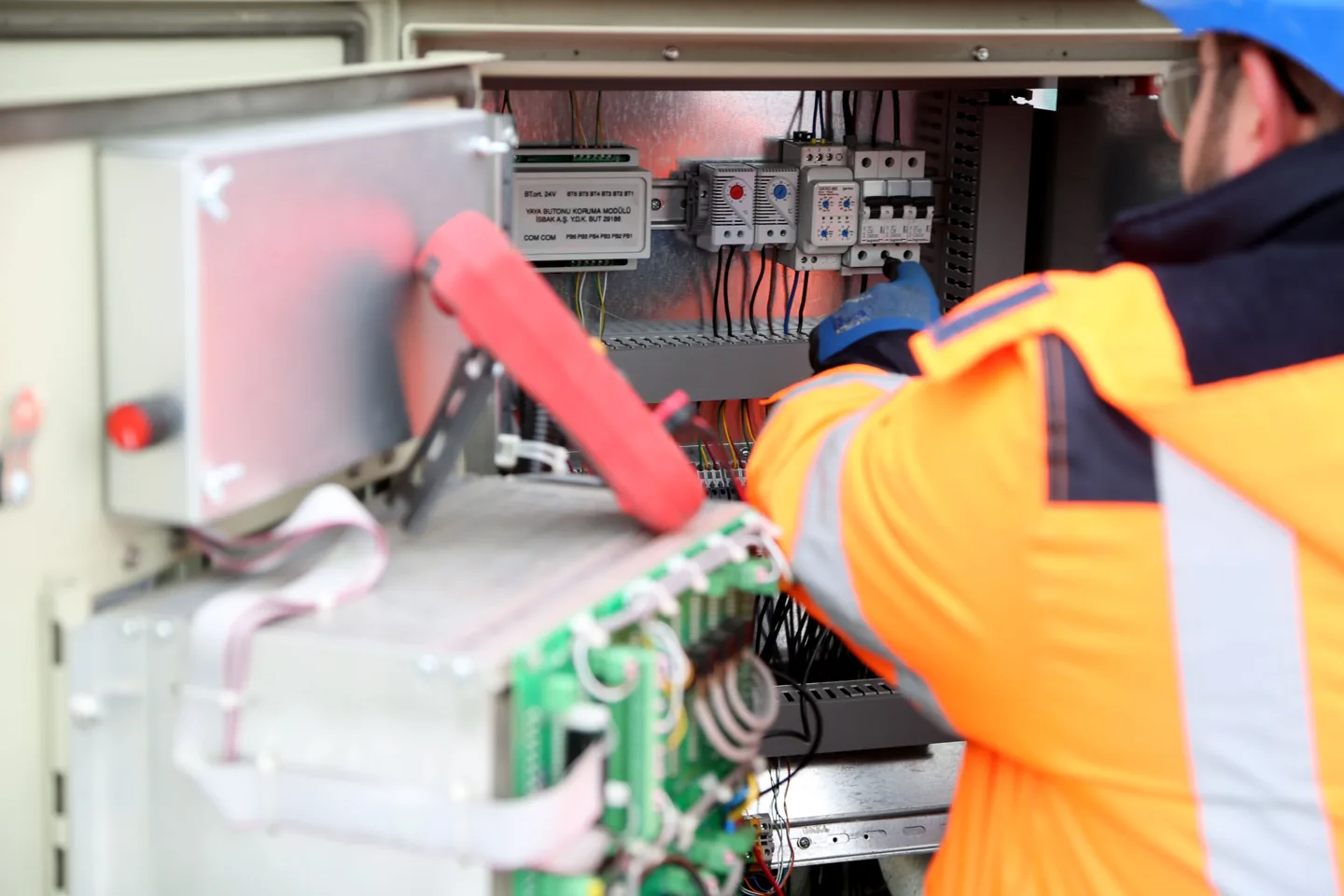
Request a deliverables list with a reviewer and acceptance evidence for each item. A video of the experience is useful for discussion, but does not replace access to the runnable build, agreed devices or the information needed to operate and maintain it. The following checklist is a suggested procurement framework, not a promise that every item is included in every Mimic proposal.
- Approved scenario: Learning objective, procedure references, decision points, feedback script and explicit boundaries.
- Asset inventory: Models, photographs, audio, terminology and equipment references, with source permissions and revision identifiers.
- Reviewable prototype: The key interaction on the proposed hardware, with a recorded review of readability, controls and recovery behaviour.
- Pilot build: Version identifier, installation instructions, supported device configuration and known limitations.
- Facilitator pack: Session brief, setup and reset instructions, observation sheet, alternative access route and technical support contact.
- Measurement pack: Event definitions, assessment rubric, export format and agreed access and retention arrangements.
- Handover record: Accepted changes, outstanding defects, ownership and licence terms, update responsibilities and support scope.
Ask which files are editable and which require the supplier's tools or licence. Agree whether the handover includes source assets, build files or only an executable experience. Do not assume CAD availability means it is ready for an interactive application: permissions, preparation and the detail needed for the learning task still require review.
Keep learner records proportionate to the evaluation. Identify what is collected, why, who can access it and when it is removed. If LMS reporting is included, specify the actual fields and test their meaning. “Completed” could mean opening the module, reaching the final screen or satisfying assessment criteria; those are different records.
Organise review gates and the pilot session
Use review gates tied to evidence rather than a promised universal production timetable. The calendar depends on source availability, asset preparation, device procurement, integrations and reviewer access. Reserve review time with operations before committing the delivery date. Our project process explains how discovery and production reviews fit together.
- Brief gate: Approve the objective, references, scope and assessment. Record missing information and its owner.
- Interaction gate: Review a representative interaction before producing the full environment. Check whether the intended users understand the controls and feedback.
- Content gate: Have the subject expert check terminology, locations, decisions and exceptions against approved references.
- Readiness gate: Rehearse installation, fitting, facilitator observation, reset and the agreed response to technical failure.
- Evidence gate: Review participant observations and assessments, then document the decision and unresolved issues.
For the session, allow time for introduction, device familiarisation, practice, debrief and assessment. Record coaching separately from independent performance. Include intended users with different experience levels and access needs, rather than relying only on the project team. Provide an appropriate alternative for anyone unable to use the selected display comfortably.
Agree how the facilitator pauses or ends a session and how participants report discomfort or confusion. In an AR trial, confirm the permitted training area and relationship to operating equipment with the responsible site team. The pilot content is not a substitute for approved procedures or site controls. Run the readiness review under the conditions actually proposed for delivery.
Choose success measures and feedback
Separate delivery, learning and transfer. Delivery measures show whether the experience works reliably. Learning measures show what participants understand or can demonstrate. Transfer asks whether they can apply that learning later in the relevant work context. The CDC's training evaluation guidance recommends assessing learning and learning transfer, using before-and-after assessment and suitable follow-up where feasible.
For the sample inspection-location pilot, record correct identification, explanation of the escalation route, prompts needed and any unrecognised exception. Agree the assessment method before the session. A brief independent demonstration on an approved training asset may reveal more than a repeat of the same guided sequence. Choose the follow-up timing around an actual opportunity to apply the learning.
- Technical evidence: Which build ran, on which device, with what interruptions or setup assistance?
- Learning evidence: Which criteria were demonstrated independently, with a prompt or not yet demonstrated?
- Operational evidence: What did the authorised follow-up assessor observe, and under which conditions?
- Participant feedback: Which cue, instruction or interaction was unclear, uncomfortable or unnecessary?
Sample feedback: “You identified all three locations. At the unfamiliar condition, you continued without explaining who should review it. Repeat that decision point and describe the agreed escalation route before continuing.” This fictional example links feedback to an observed action and next practice step. Avoid labels such as “poor performer” or a score that hides the specific difficulty.
Establish a baseline using the current training approach, with comparable objectives and assessment conditions. PTC's AR measurement planning guidance also starts with goals and baseline metrics. Record differences in experience, coaching, task difficulty and assessment timing. If there is no credible comparison, describe the findings as observations rather than claiming the technology caused an improvement.
Report participant counts and missing assessments alongside any percentages. Time measurements should state whether they cover the exercise or the whole session. Faster completion with more errors is not an unqualified improvement. Our training measurement guide develops these distinctions beyond a single manufacturing pilot.
Make the rollout decision
End with a written decision: expand, revise and repeat, or stop. Record the evidence, limitations, unresolved defects and accountable owner. A small pilot can reveal unclear instructions or delivery problems; it does not establish company-wide savings or a reduction in rare incidents. Include negative findings so the next decision is based on the complete record.
Before expansion, confirm content ownership, procedure-change triggers, device support, facilitator capacity and ongoing costs. Use the VR training budget guide to separate development from rollout and maintenance questions. Recheck the assumptions for every additional task or site rather than multiplying a prototype price by the number of learners.
A useful handover names the current approved version, the person who can withdraw it and the alternative training method available during an update. Retain the decision log and assessment definitions with the project record. These documents help a future team understand what was accepted, what remains untested and why the original pilot was bounded.
Manufacturing XR training pilot: FAQs
How large should the first manufacturing XR pilot be?
Start with a bounded task, defined learner group and equipment variant that subject experts can review thoroughly. Choose participant numbers around the evaluation question and practical constraints. A usability trial and a study intended to estimate effectiveness need different designs.
How long does an XR pilot take to develop?
There is no reliable universal duration. The schedule depends on approved source material, model preparation, interactions, integrations, device availability and review cycles. Ask for milestones, dependencies and reviewer commitments before agreeing a delivery date.
What should we prepare before requesting a proposal?
Bring the learning problem, intended audience, approved procedure revision, equipment references, delivery constraints and proposed assessment. Identify the content owner and any permissions needed for photographs, CAD or other source assets.
Should we choose VR or AR for the pilot?
Choose according to the task. VR supports rehearsal in a simulated environment; AR can provide guidance alongside physical equipment. Compare both with a simpler format when appropriate, and assess the actual interaction and delivery conditions before committing.
Which success measures matter most?
Use measures tied to the learning objective: correct decisions, independent demonstration, assistance required and suitable follow-up observations. Keep reliability and participant feedback separate from competence. Completion rates alone do not establish transfer to work.
Does completing the simulation certify a worker?
No automatic certification should be assumed. Any competence decision must follow the organisation's approved assessment arrangements and applicable requirements. The experience can provide practice and evidence, but its role must be agreed with the responsible assessors.
Do we need an LMS integration for the first pilot?
Only if it is necessary to test the intended workflow. A controlled observation sheet and agreed export may answer early questions. If integration is included, define the required fields, completion meaning, access permissions and acceptance checks.
What if the pilot does not justify a rollout?
Document why. The next step may be revising instructions, changing the interaction, providing more physical practice or using another format. A pilot that prevents an unsuitable rollout has still provided useful evidence for the investment decision.
Prepare your pilot discussion
Bring one task, its approved references and the evidence you need to make a decision. Agree the deliverables and review responsibilities before expanding the environment. A clear brief makes the experience easier to evaluate and the proposal easier to compare.
Explore Mimic Business's immersive XR training services for the delivery possibilities. Discuss your manufacturing XR training pilot with the team, including your equipment references, audience and practical constraints.
Discussion
Join the conversation
Comments are reviewed before publication to keep the discussion useful.